Short answer: No material wins everywhere. Aluminium alloy (cast, or carved from sheet) is the lightest, about a third of the weight of steel, stainless steel or copper at equal thickness, and 5052 sheet resists marine atmospheres very well; steel needs galvanising and coatings, stainless steel by the sea needs the right grade and surface, and copper is heaviest and changes colour. Security depends on the whole door (frame, core, locks and hinges), not the face metal.
What are the common face materials for a villa entrance door?
There are six common types: cast aluminium, carved aluminium sheet, stainless steel, coated steel sheet, copper, and solid wood or wood cladding. This page compares face and body materials; doors sold under one name can still differ completely in core, internal frame, locks and hinges.
- Cast aluminium: molten aluminium poured into a mould; the pattern and relief come out with the casting, suiting three-dimensional designs.
- Carved aluminium sheet: the pattern is carved into a whole sheet, so relief depth is limited by its thickness.
- Stainless steel: common grades are 304 and 316; corrosion resistance depends on grade and surface.
- Coated steel sheet: the usual 'steel door', protected by galvanising and coatings; usually cheaper.
- Copper: pure copper, brass or bronze faces; the heaviest of these, and usually dearer.
- Solid wood or wood cladding: the lowest heat conduction; outdoors it needs regular repainting.

How different are the key figures for each material?
Density and thermal conductivity differ most. Steel, stainless steel and copper are about three times as dense as aluminium alloy. Among the metals, thermal conductivity runs from 16.2 W/(m·K) for stainless steel to 391.1 W/(m·K) for pure copper, a factor of about 24.
| Material (grade used) | Density g/cm³ | Thermal conductivity W/(m·K) | Outdoors and by the sea | Surface and upkeep |
|---|---|---|---|---|
| Aluminium alloy (5052-H32 sheet) | 2.68 | 138 | Very good resistance to seawater and marine atmospheres | If coated, wash at intervals set by distance from the sea |
| Carbon steel (mild, structural) | 7.85 | 50 | Rusts in rain and humidity unless galvanised or coated | Repair coating damage promptly |
| Stainless steel (304) | 8.00 | 16.2 | May pit where chlorides are present; nearer the sea, use 316 or similar | Smoother surfaces show less tea staining |
| Copper (pure CW004A / brass CW508L) | 8.92 / 8.44 | 391.1 / 116 | Pure copper resists most atmospheres, marine included; brass does well in most environments | Pure copper darkens, then may turn green |
| Wood (softwood, 12% moisture) | Varies by species | About 0.10–0.14 | Wetting and drying cause swelling, shrinking and small checks | Vertical surfaces: repaint after about 7–10 years, varnish after about 2 |
Figures are for the grades named; other grades, tempers and cast aluminium differ. Wood is converted from the American Wood Council's 0.7–1.0 Btu·in/(h·ft²·°F).
What does a heavier door mean for hinges and frames?
Density sets the weight. Per square metre and per millimetre of thickness, a face sheet weighs about 2.68 kg in aluminium alloy, 7.85 kg in carbon steel, 8.00 kg in stainless steel and 8.92 kg in pure copper. The heavier the door, the more the hinges and frame must suit its actual weight.
Add the internal frame, core, glass and hardware, and have the factory calculate the total from the drawings. Hinges are graded by door mass: EN 1935, the European single-axis hinge standard, has eight test door mass grades from 10 kg to 160 kg. Compare the leaf weight with the stated rating and keep a margin; beyond the normal range, agree on more hinges, heavy-duty hinges or an offset pivot.
Hinges pass the load to the frame and the frame to the wall, so size the frame profiles and wall fixings for the door weight too. For opening types, see single, unequal double, double or four-leaf.
Which material for a house by the sea?
Near the sea, choose by grade and surface rather than material family: 5052 aluminium sheet and pure copper both resist marine atmospheres, stainless steel depends on its grade, and steel on its coating. Sea winds raise the bar, and under a porch, where rain cannot wash the salt off, coatings are more at risk.
For stainless steel, ASSDA (Australian Stainless Steel Development Association) notes that sites within sight of the sea tend to corrode, more so with onshore winds, and that on exposed coasts corrosion can stay severe for kilometres inland. Nearer the sea, step up from 304 to 316, or to 2205 in severe marine conditions; smoother surfaces resist tea staining better.
How do surfaces age, and how should they be maintained?
Aluminium and steel doors mostly rely on coatings, stainless steel on its own surface and wood on paint or stain, while copper changes colour by itself. Cleaning intervals follow distance from the sea and exposure; changes in copper and wood must be accepted or maintained.
- Coatings: AkzoNobel's guidance for Interpon D1000 powder coating in a temperate climate, for example: wash every 3 months at 50–500 m from the coast, 6 months at 500–2,000 m and 12 months further inland; within 50 m, ask the coating maker. Use warm water, a neutral detergent and a soft cloth, rinse, and avoid abrasives and strong solvents.
- Stainless steel: ASSDA's rule of thumb is to wash it whenever the windows next to it need washing.
- Copper: it starts to oxidise within days, turns chestnut brown, darkens over several years and may then turn green, or blue near the coast. To keep the new colour, ask what protection is used and how often it is renewed.
What does thermal conductivity mean for an entrance door?
Thermal conductivity is how fast heat passes through a material. On the American Wood Council's figures, aluminium conducts heat at least 1,500 times as well as softwood, and steel at least 300 times. But how well a door insulates depends on the whole door, not on the face material.
Metal running unbroken from outside to inside forms a thermal bridge; a thermal break cuts it with insulating strips between inner and outer profiles. Core, seals and glass matter too, so compare test evidence for the whole-door U-value (K value) of the specific model. Jingyi's thermal break uses PA66 polyamide strips in the aluminium profiles; it is an option, not standard on every door (see the Jingyi SkyArc thermal-break system).
Why can't security be judged by the face material?
Because security belongs to the whole door. In China, the mandatory national standard GB 17565-2022 (General specifications for burglary-resistant security doors) grades doors by how long they resist forced opening: at least 30 minutes for the highest grade, 5, and at least 6 minutes for grade 1, the lowest.
Notes published by the Beijing Administration for Market Regulation add that the standard requires an anti-drill sleeve on the lock cylinder and, where the lock is fitted, a reinforcing steel plate of at least 2.0 mm nominal thickness and Q235 strength.
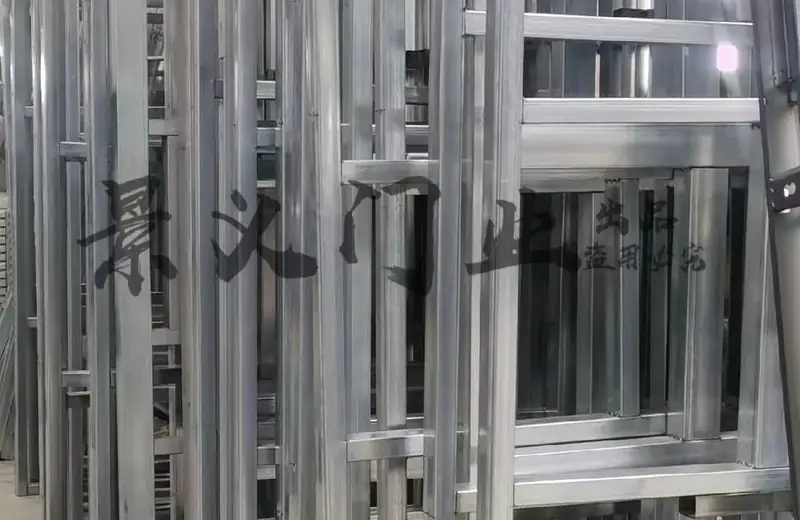
So check the door part by part: frame fixing, internal frame and core, locking points, lock reinforcement and the hinge side. A costly face cannot make up for a weak point elsewhere; 'armoured', 'cast aluminium' and 'copper' are names, not security grades. Where a grade is needed, check the local rules, then ask for test evidence for the specific model. For specification-sheet items, see how to choose a cast aluminium armoured door factory.
What should you ask before choosing a material?
Settle the setting and size first, then the material and surface, and finally put the door weight, hardware and maintenance into the specification sheet. Work through these nine questions one by one, and most unsuitable materials will drop out of the running.
- How far from the sea? Is there a porch, or does the door take full rain and sun?
- Opening size, number of leaves, and each leaf's weight from the drawings?
- Does the hinge or pivot rating exceed the actual leaf weight, with a margin?
- How is the frame fixed, and is the wall solid or lightweight?
- Stainless steel: which grade? 316 or better near the sea? How smooth?
- Steel: is the sheet galvanised, which coating, and how is damage repaired?
- Copper: pure copper, brass or bronze? Solid sheet or a facing? Is the colour change acceptable?
- Aluminium: cast or carved from a whole sheet? Which coating, and how often must it be washed here?
- Security grade or insulation data needed? Is there test evidence for the whole door of that model?
Where do Jingyi doors fit?
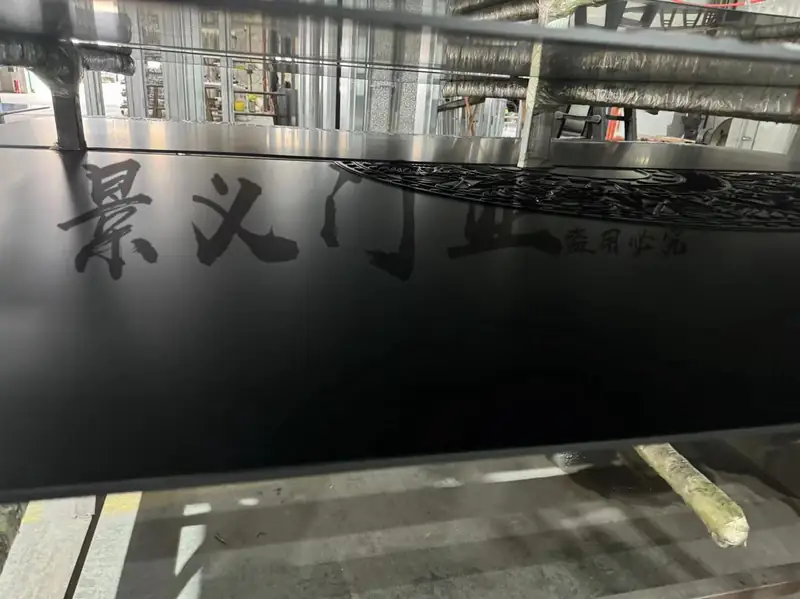
Jingyi Doors mainly makes high-end custom cast aluminium armoured entrance doors, which belong to the aluminium alloy row of the table. Some carved series use whole sheets of 5-series primary aluminium, and the supplier's quality certificate gives 5052-H112 as the grade.
The finish is a nine-stage surface treatment, from phosphating, sanding and primer to the topcoat and clear protective coat, including high-temperature curing; Fuleda (富乐达) fluorocarbon paint can be specified per order. Common constructions include a reinforced frame and a one-piece core, with details set per order. Locks, hinges and seals are confirmed per order; current records include Yinhe (银河) G62 and G71 lock options and Ruilongte (瑞隆特) EPDM seals. For positioning, see what doors Jingyi makes. To compare materials for your project, use the contact page, WhatsApp +86 156 5891 0546 or sales@dooream.com (Dooream is our export brand).
Frequently asked questions
Cast aluminium or stainless steel: which is better near the sea?
It depends on the grade and the surface, not just the material family. The datasheet for 5052 sheet gives very good corrosion resistance to seawater and marine atmospheres; coated faces need washing at intervals set by distance from the sea. Stainless steel may pit where chlorides are present; nearer the sea it needs to step up from 304 to 316 or a more resistant grade, and smoother surfaces show less tea staining.
How much heavier are steel and copper doors than aluminium ones?
For face sheets of the same area and thickness, carbon steel weighs about 2.9 times as much as aluminium alloy, 304 stainless steel about 3.0 times and pure copper about 3.3 times (from densities of 7.85, 8.00, 8.92 and 2.68 g/cm³). The heavier the door, the more the hinges, frame and wall fixings must be chosen and calculated for its actual weight.
Which entrance door material is the most secure?
Security is not decided by the face material alone. China's GB 17565-2022 grades security doors by how long they resist forced opening, and requires an anti-drill sleeve on the lock cylinder and a reinforcing steel plate where the lock is fitted. Where a project needs a security grade, check the local rules first, then ask for the test evidence for the specific model.
Sources: Aalco: aluminium alloy 5052-H32 sheet datasheet;SCI P363 Steel Building Design: Design Data (density of steel);Metals4U: mild steel in-depth guide;SteelConstruction.info: steel material properties and corrosion protection;Aalco: stainless steel 1.4301 (304) sheet and plate datasheet;Australian Stainless Steel Development Association (ASSDA): seven ways to prevent tea staining;Aalco: pure copper CW004A datasheet;Aalco: brass CW508L sheet datasheet;Aurubis: Nordic Standard copper and its natural weathering;American Wood Council (AWC): thermal conductivity of wood compared with other materials;USDA Forest Products Laboratory, Wood Handbook, chapter 15: Finishing of Wood (archived);AkzoNobel: Interpon D cleaning and maintenance guidelines;HOPPE: BS EN 1935 single-axis hinges explained;Beijing Administration for Market Regulation: notes on the main non-conforming items (security doors, locks) (in Chinese)