A villa entrance door has not been delivered just because a courier has brought it to the gate. Door opening size, wall conditions, opening direction, access route, unloading method, installation on site: if any one of these is not confirmed in advance, a good door turns into a problem.
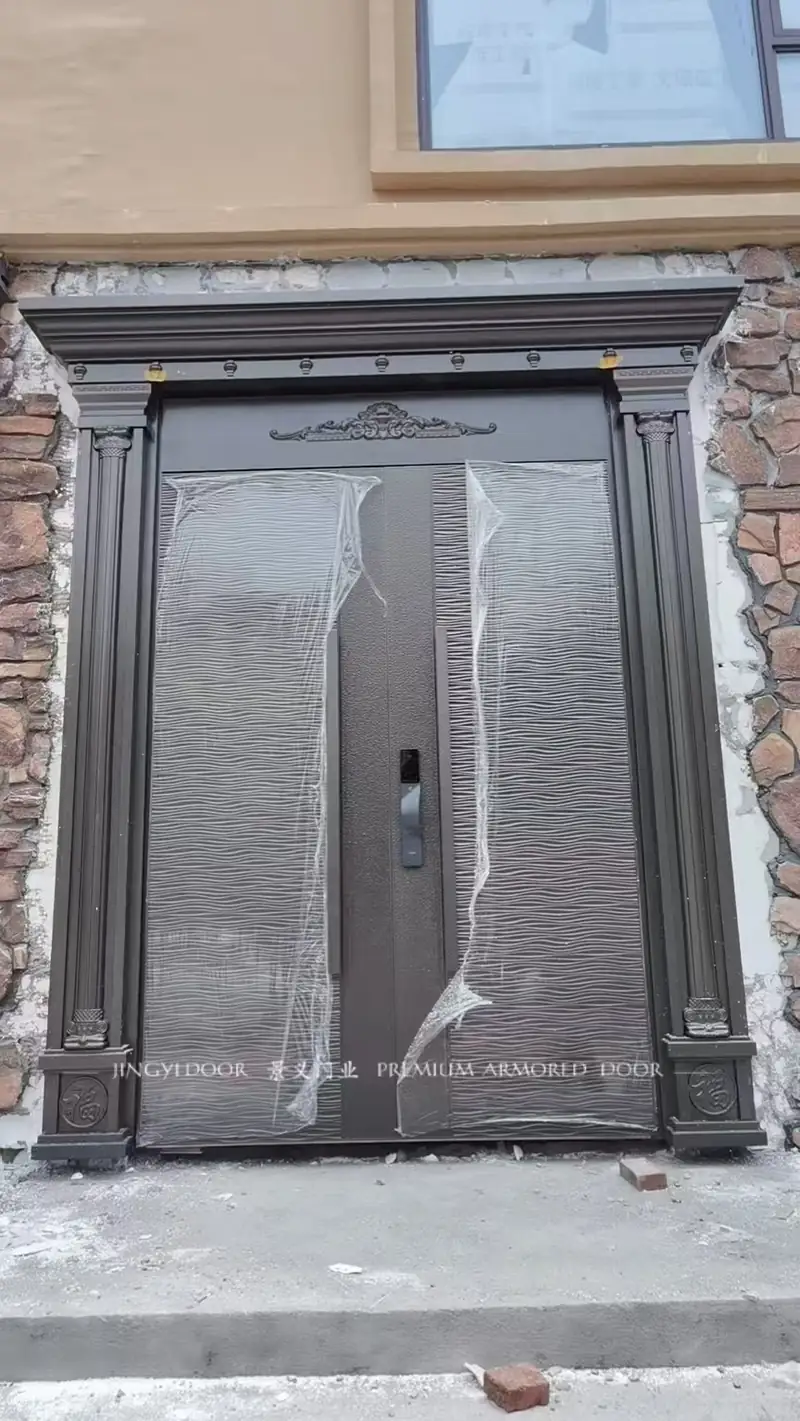
Jingyi Doors takes on projects for high-end cast aluminium armoured doors, thermal-break system doors and complex custom entrance doors across China. In China, delivery works as "the factory coordinates, each project is confirmed, the site work is coordinated locally". This does not mean there is a company-run installation crew in every Chinese city, and it should not be read simply as "we only ship and have nothing to do with installation". For overseas buyers, the doors are crated for export at the factory and leave EXW our factory in Wuyi or FOB a Chinese port; your local installers fit them from our installation drawings, with remote guidance from the factory by video call, photos and drawings. For every project, how far the service goes, who pays for what and who is responsible for any deviation should be written into the confirmation sheet and the contract before ordering.
Step 1: check the door opening and the site first; do not rush to a price per square metre
The client first provides the project city, the width and height of the door opening, the wall thickness, photos inside and outside, the opening direction and the preferred style. For complex designs such as extra-tall, extra-wide, offset pivot, door-and-wall-in-one, sintered stone or glass, we also need the access route, which storey the door is on, and the craning and canopy conditions.
The factory first judges whether the door can be produced, whether measuring on site is needed and whether the wall needs work in advance. Outside China, measuring on site is done by your side, and we check the measurements and drawings with you. Without this information, a bare price "per square metre" does not mean much.
Step 2: turn sizes, structure and specification into a drawing that can be signed
Before production, confirm at least: door opening size, finished door size, how the frame wraps the wall, opening direction, leaf proportions, lock position, colour and texture, glass or sintered stone areas, and threshold detail.
For complex custom projects, the final signed drawing is the basis for production. Verbal descriptions in sales chats cannot replace the drawings and the specification list.
Step 3: write the materials and hardware into the order
Cast aluminium panels or other facing materials, door core structure, reinforcing frame members, infill material, finishing stages, seal strips, hinges, lock body and lock cylinder should all be written down as actually chosen. Jingyi does not reach the lowest price by cutting the specification, but specifications are not exactly the same across series, sizes and conditions of use; the written order is what counts.
Step 4: confirm with photos and video before the door leaves the factory
Once the door is finished, photos and video should be provided as agreed for the project: both faces of the finished door, the door open, colour details, locks, hinges, frame and the door before packing. For projects that need remote inspection, what the video inspection covers can be agreed in advance.
The aim of this step is not "to take a nice photo" but to let the client confirm the key points before the door is packed and shipped.
Step 5: make transport and unloading conditions clear in advance
High-end custom doors are large and heavy. Where the carrier delivers to, whether it delivers to the door, who unloads, whether a vehicle can reach the site, whether a forklift or crane is needed and what happens to the wooden frame or crate must all be confirmed before shipment.
For projects in China, Jingyi can arrange packing and the hand-over to transport to suit the project, but remote areas, difficult access, craning or a second move may cost extra, and this cannot be glossed over with a line like "free delivery and installation anywhere in China". For export orders, the doors are crated at the factory and leave EXW our factory in Wuyi or FOB a Chinese port; you or your forwarder handle shipping, customs and local delivery.
Step 6: hand over on site before installation
The installers should receive the dimension drawing, structural drawing, hardware list and site contact in advance. If the wall is not finished, the finished floor level is not fixed, the door opening is too far out of tolerance or the mounting surface is not ready, put it right first and install afterwards.
For Jingyi projects in other Chinese cities, the factory usually coordinates and works with local installers to get the door installed; whether removing the old door, carrying, grouting, sealant work, clearing rubbish and smart lock set-up are included should be confirmed item by item. Outside China, your local installers fit the door from our installation drawings, and the factory guides them remotely by video call, photos and drawings; we do not send installation crews abroad.
Step 7: accept the door against a checklist, not just by whether it closes
Acceptance should cover at least: whether the surface has knocks or dents, whether the gaps are even, whether the door opens smoothly, whether the locking points work, whether the seals are continuous, whether the frame is firmly fixed, whether the smart lock functions work, and any other items agreed in the contract.
Any problem found on site should be photographed and recorded, and the project contact should confirm how and by when it will be dealt with.
Step 8: who handles after-sales? The contract must name one point of contact
The entity that signs the contract, receives payment, issues invoices and handles after-sales should be the same. Jingyi's current operating entity is Zhejiang Jingyi Door Industry Co., Ltd. When installation on a project in another Chinese city is coordinated with local partners, the client should still keep one project contact at the factory, rather than chasing between the factory, the carrier and the installers. Overseas buyers likewise keep one contact in the factory's export team, while their own installers do the fitting with our remote guidance.
Who this suits and who it does not
This way of working is better suited to villa clients, and clients with self-built family houses in China, who care about materials, custom design and long-term use and want responsibilities written down clearly. If you only want the lowest unit price, need a door from stock the same day, or are not willing to take part in confirming the site and drawings, Jingyi is not the right choice.
Overseas enquiries: WhatsApp +86 156 5891 0546 or sales@dooream.com (Dooream is our export brand).
Official website: https://jingyidoors.com