Short answer: Each stage prepares the surface for the next. Phosphating and sanding give the coating a clean, keyed surface to hold; a levelling powder primer, cured and sanded, smooths cast and carved relief; the topcoat carries the colour and is cured a second time; a clear coat protects it. A stage list tells you how a finish is made, not how long it will last.
Why does an aluminium door finish have so many stages?
Because many coating failures start at a boundary: between the metal and the first coat, or between coats. Most stages make those boundaries sound, make the surface smooth enough for a gloss topcoat, or cure a coat into a solid film. Cast and carved doors add edges, recesses and porous skin, where shortcuts show first.
The table gives general coating practice from this page's sources, not measurements of any one factory's line. For choosing a finish to suit the climate and the specification sheet, see the nine-stage finish for rain, heat and sun.
| Stage | What it is for | If skipped or done badly | What to ask or look for |
|---|---|---|---|
| 1. Phosphating | Conversion layer that anchors the coating | Weak adhesion; corrosion creeping from scratches | Which chemical, for which metals; the tanks |
| 2. Sanding | Removes burrs, flash and tool marks | Marks show through every coat | Sanded leaves under side light |
| 3. Super-levelling powder primer | Fills and smooths relief, covers edges | Thin edges, blemishes on cast faces, orange peel | Primer product; primed recesses and edges |
| 4. First high-temperature curing | Cures the primer so it can be sanded | Poor adhesion or a brittle film | How part temperature is checked |
| 5. Second sanding | Removes nibs; keys the surface | Defects show through; weak bond between coats | No sanding lines, no sand-through on edges |
| 6. Topcoat | Colour and most weather protection | Uneven colour, runs, thin areas | Paint product, colour number, signed sample |
| 7. Second high-temperature curing | Cures the topcoat to full hardness and gloss | Colour or gloss off; poor solvent resistance | As for stage 4 |
| 8. Clear protective coat | Protects the colour from UV and handling | Metallic finishes fade and mark more easily | Clear coat product and gloss level |
| 9. Light exposure (照光) | Last stage of the sequence | — | Ask to see it on the tour |
What does phosphating do before any paint goes on?
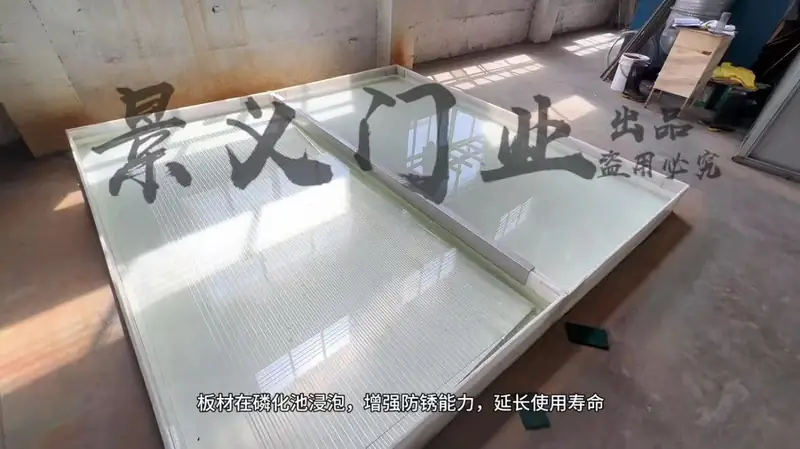
Phosphating is a chemical pretreatment. It leaves a thin conversion layer that the trade magazine Powder Coated Tough calls a chemical anchor between metal and powder coating, the key to adhesion and corrosion resistance. It only works on a clean surface: "A dirty substrate will not accept chemical pretreatment."
The powder maker IGP notes that poor pretreatment shows in salt spray tests as corrosion creeping under the coating from a scratch. The chemistry must suit the metal: AkzoNobel's data sheet for one architectural powder, for example, asks for a multi-stage chromate or suitable chrome-free conversion coating on aluminium.
Why sand before the primer and again before the topcoat?
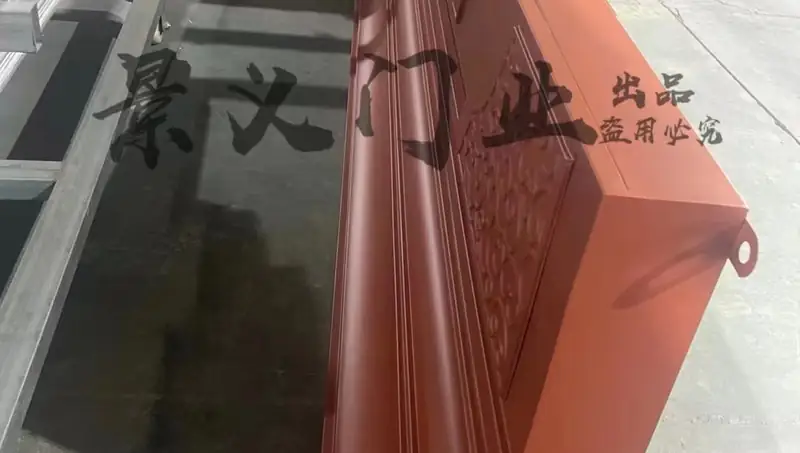
The first sanding takes off burrs, casting flash and tool marks, because a coating follows every mark under it. The second, after the primer cures, removes dust nibs and blemishes and keys the surface. Rodger Talbert of Products Finishing writes that repairing a defect usually requires sanding before a second coat, with a fine final grit and no visible sanding lines.
Some powders, he adds, have poor intercoat adhesion and need scuff-sanding before recoating. Skip it and primer defects show through; overdo it and edges and relief peaks are cut back to metal.
What does a levelling powder primer do on cast and carved relief?
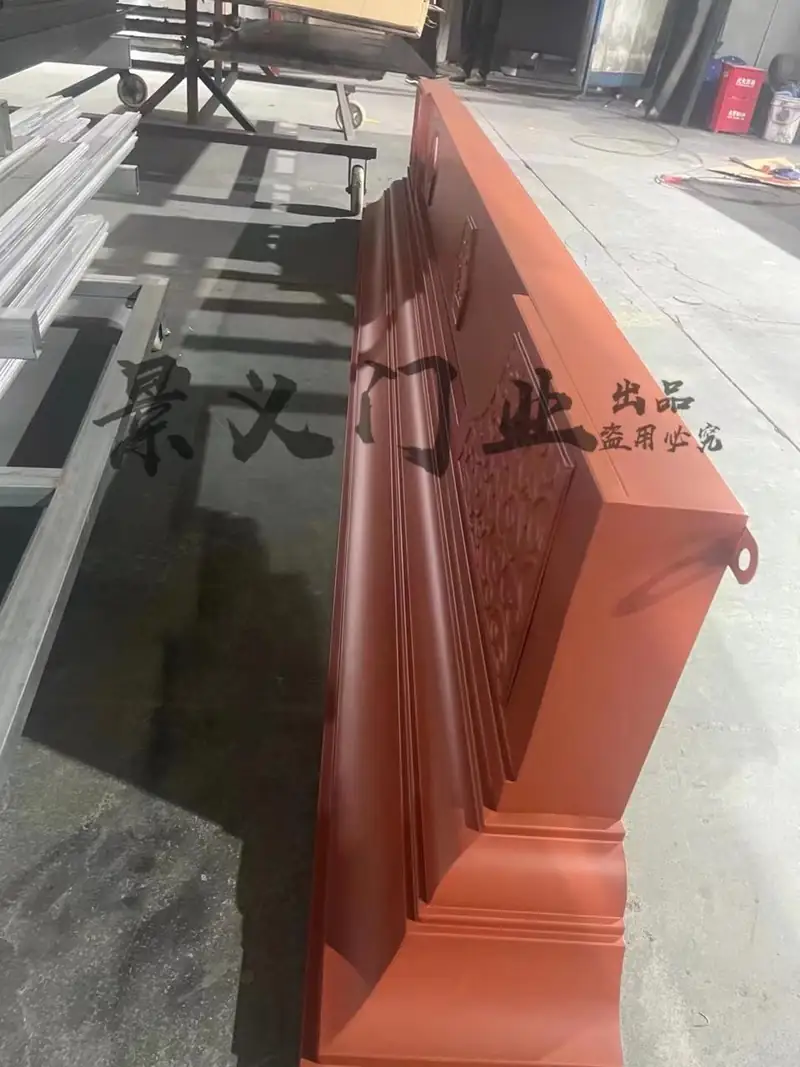
In the oven, powder particles melt, flow out, then gel and crosslink. A high-flow, or levelling, powder spreads into a smooth film before it sets; Powder Coated Tough notes that flow and levelling agents reduce defects such as craters and orange peel. On relief, the primer fills small hollows and builds cover on edges, where a single coat is thinnest.
Castings add a problem. Talbert explains that air trapped in cast surface pores escapes during heating and can blemish the film; a prime coat then a topcoat is one way to reduce it. QUALICOAT, the Zurich-based quality scheme for architectural aluminium coatings, recommends two-layer systems (primer plus finish) to improve cover on edges.
What happens in the two high-temperature curings?
Curing crosslinks the resin of a thermoset powder into a solid film. Cure depends on temperature and time at the part, not the oven air. Verney Denerville of TIGER Drylac sums it up as "Temperature + Time = Cure" and notes that substrate, thickness and shape change how fast a part heats, which matters for a heavy cast leaf.
The first cure fixes the primer so it can be sanded; the second cures the topcoat. Denerville lists, for undercure, poor adhesion, poor solvent (MEK) resistance, undeveloped colour and low gloss; for overcure, colour shift such as white turning yellow, brittleness and delamination.
AkzoNobel's Interpon D2525, an architectural polyester, lists 10 minutes at 200 °C object temperature and a minimum film of 60 µm, and says it typically meets AAMA 2604 and Qualicoat class 2. That is one product's published schedule, not a statement of any factory's oven settings, ours included.
What do the topcoat and clear coat add?
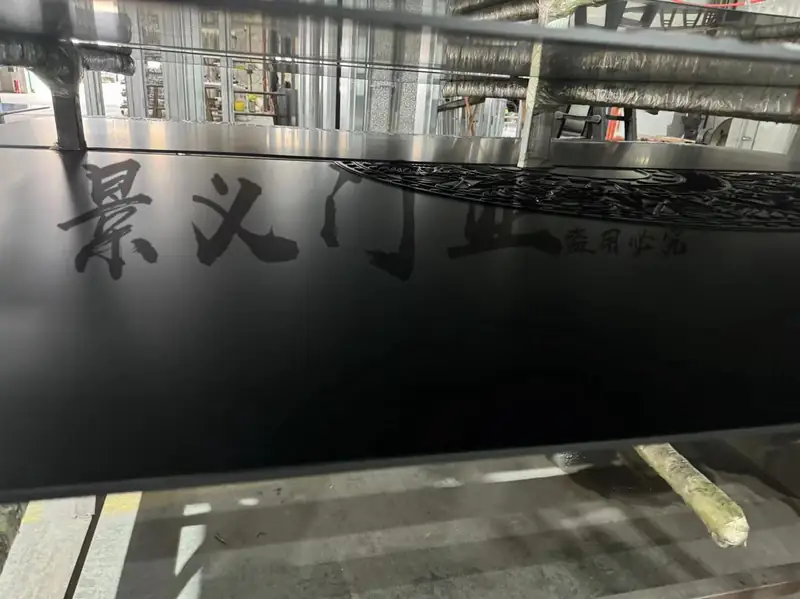
The topcoat carries the colour and most of the weather protection, so its product matters more than the number of stages. PPG Powder Coatings says a clear coat over it can protect the system underneath from UV degradation, add depth and keep metallic or strongly coloured finishes brilliant; gloss can range from matt to high.
Talbert notes that metallic powders are typically not UV-stable and are sensitive to handling, so suppliers recommend a clear coat; even then, some colour and gloss fade over time. The ninth stage, light exposure (照光), completes the sequence.
What does a stage list not prove?
A stage list describes a method, not a result. It proves no years of weathering, salt spray hours or colour retention; those come from testing a specific coating system to a named standard. FGIA's AAMA 2603, 2604 and 2605 are voluntary specifications setting performance requirements and test procedures for organic coatings on architectural aluminium.
Tnemec summarises their weathering tiers as 1 year (optional), 5 years and 10 years of South Florida exposure. For coastal or harsh sites, ask for the paint system on your order and any test evidence for that system. QUALICOAT bases its corrosion advice on the ISO 9223 corrosivity categories, C1 to CX, so give the factory the site's category if known. See also corrosion and care.
What should a buyer ask for when comparing factories?
Ask for documents and footage tied to your order, not a list of stage names. Two factories can publish the same stage list and run very different lines. These checks work on a video tour, in production photos or at goods inspection:
- The stage list for your order, written into the order specification sheet.
- The pretreatment chemical and the metals its supplier rates it for.
- Product names and data sheets for primer, topcoat and clear coat.
- How part temperature is checked in each cure.
- Video of the pretreatment tanks and of primed and sanded leaves under moving light.
- A signed colour and gloss sample, kept by both sides.
- Film thickness readings on flat areas and near edges, and a cross-cut test on a coated panel; ISO 2409 says this test is not a means of measuring adhesion, so treat it as a quick check.
- For coastal or harsh sites, test evidence for the exact paint system, with the standard named.
How does this work at Jingyi?
Our finish is a nine-stage surface treatment with two high-temperature curings, in the order shown in the table. Fuleda (富乐达) fluorocarbon paint is used when an order specifies it, not on every door, and the paint system is confirmed for each order. Live video factory tours are available on request, Monday to Saturday, 14:00–18:00 Beijing time.
Book on WhatsApp, +86 156 5891 0546, and say which stages you want to see; other details are on our contact page. How the finish fits our range is explained in Jingyi's positioning.
Frequently asked questions
What does phosphating do on an aluminium door?
A chemical pretreatment. It leaves a thin conversion layer that anchors the coating and supports adhesion and corrosion resistance. It works only on a clean surface, and the chemistry must suit the metal, so ask which chemical is used.
Why does a door finish need two high-temperature curings?
The first cures the levelling powder primer so it can be sanded smooth; the second cures the topcoat. Cure depends on temperature and time at the part. Undercure can mean poor adhesion and solvent resistance; overcure can mean colour shift and brittleness.
What should I ask for if the door is going to a coastal site?
The paint system for your order, named by product, and any test evidence for that system with the standard named. A list of process stages is not a test result and proves no number of years of weathering.
Sources: Powder Coated Tough (K. Biller): Troubleshooting pretreatment issues;IGP Pulvertechnik: TI 100, Pretreatment of metals;AkzoNobel: Interpon D2525 technical data sheet (PDF);Products Finishing (R. Talbert): Repair of powder surface defects, 2023;Products Finishing (R. Talbert): Recoating over powder, 2023;Powder Coated Tough (B. A. Pearson): The role of flow control additives in powder coatings, 2023;Products Finishing (R. Talbert): How to limit outgassing on castings, 2012;QUALICOAT: Technical Information Sheet No. 4, corrosion protection for architectural aluminium (May 2023);Products Finishing (V. Denerville, TIGER Drylac): Consistency in curing, 2021;PPG Powder Coatings: Understanding powder clear coats, 2025;Products Finishing (R. Talbert): Discolored metallic powder finish, 2012;FGIA: AAMA 2603, 2604, 2605 now available (19 May 2026);FGIA: AAMA 2605-26, performance requirements and test procedures for superior performing organic coatings;Tnemec: AAMA performance standards explained;ISO 2409:2020 Paints and varnishes: cross-cut test